Buffalo rodent control requires specialized architectural remediation tailored to nineteenth-century and early twentieth-century regional architecture. In historic neighborhoods such as Allentown, Elmwood Village, and…
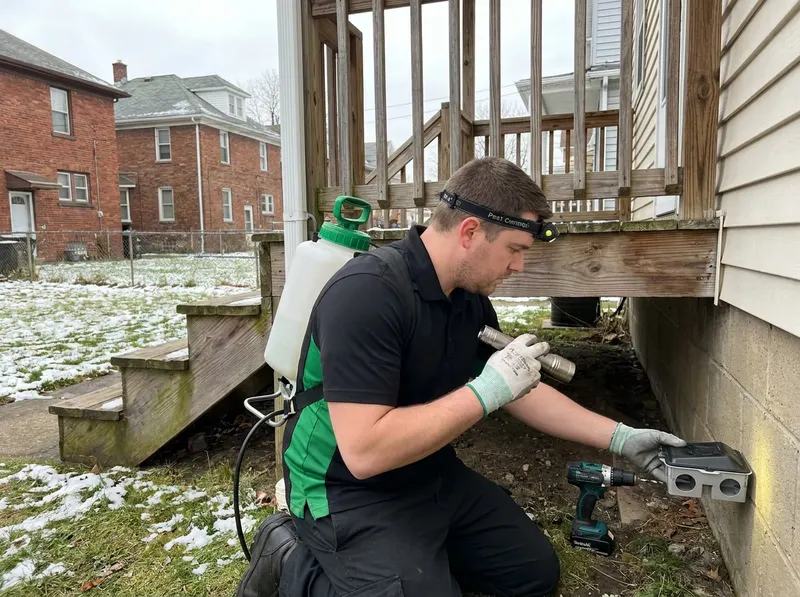
Buffalo rodent control requires specialized architectural remediation tailored to nineteenth-century and early twentieth-century regional architecture. In historic neighborhoods such as Allentown, Elmwood Village, and Parkside, balloon-frame construction and stone masonry foundations create interconnected travel routes for rodents seeking thermal refuge when Lake Erie surface temperatures decline in November. Mice can compress their skeletal structure to penetrate foundation apertures as narrow as 1/4 inch, while adult Norway rats enter through 1/2-inch gaps beneath aging wood sills, porch decks, and deteriorated mortar joints. Addressing these intrusions requires mechanical containment rather than broadcast chemical applications, safeguarding interior air quality and non-target organisms while securing food stores and attic insulation layers.
Structural exclusion is the definitive measure for preventing re-infestation across North Buffalo, Black Rock, and South Buffalo properties. Standard retail bait stations frequently fail because rodents consume bait without addressing the exterior structural pathways, leading to secondary odor complications behind lathe-and-plaster walls. Clinical containment involves sealing plumbing penetrations, sill plates, and deteriorated basement window frames with hydraulic cement, copper mesh, and heavy-gauge steel barriers that resist gnawing. In high-density settings like the Fruit Belt, Larkinville, and the West Side, external pressure from commercial corridors requires durable perimeter defenses that withstand freeze-thaw expansion cycles along stone foundations.
Remediation protocols operate through a three-phase sequence to ensure complete population eradication and long-term home defense. Step one comprises a diagnostic audit from the basement floor to the roofline to map active travel runways, rub marks, gnaw patterns, and fecal deposits. Step two implements a dense grid of mechanical interior traps paired with exterior barrier installation, establishing a fortified perimeter while swiftly extracting the trapped interior population without interior poisons. Step three concludes with localized sanitation of nesting sites, removal of contaminated substrate, and application of biological neutralizing agents to denature rodent pheromone trails.
Every job gets a firm, written price after a free on-site visit.
Tell us about your rodent control job in Buffalo and we'll send a clear, written quote, usually the same day.
 Gravion Pest Control