Termite control protects residential structural framing from silent cellulose destruction. In older Buffalo neighborhoods such as Allentown, Parkside, and the Elmwood Village, homes feature porous fieldstone…
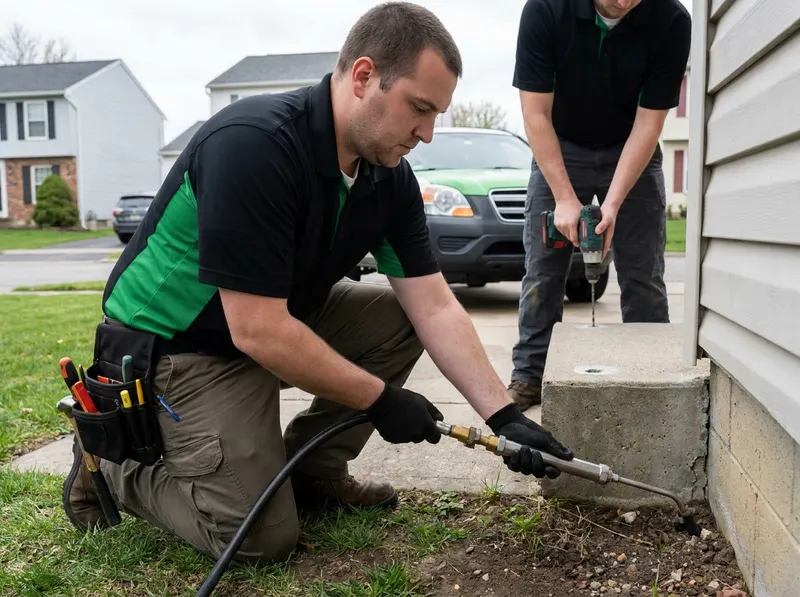
Termite control protects residential structural framing from silent cellulose destruction. In older Buffalo neighborhoods such as Allentown, Parkside, and the Elmwood Village, homes feature porous fieldstone foundations, rough-cut hemlock sills, and stacked brick piers. These masonry substrates allow moisture from heavy lake-effect snowpacks to seep into basements, creating ideal ground-contact humidity for eastern subterranean termites. Subterranean colonies build vertical shelter tubes over foundation walls to reach sill plates, floor joists, and subfloors. A targeted barrier treatment is distinct from drywood termite fumigation; subterranean species require continuous fluid soil barriers or slow-acting chitin synthesis inhibitors to halt foraging workers without requiring tenting or evacuation.
Selecting between fluid barrier injection and external monitoring bait networks depends on foundation integrity. For limestone rubble foundations common in North Buffalo and the West Side, high-pressure liquid termiticides like fipronil establish a continuous chemical envelope along interior cellar walls and exterior perimeters. This stops termite passage directly. For slab-on-grade developments or commercial structures in Larkinville and South Buffalo, sub-slab drilling through expansion joints injects termiticide directly beneath basement pads. Bait stations placed every 10 to 15 linear feet around the property perimeter serve as continuous sentinels, drawing workers to slow-acting matrixes that transfer to the queen. Fluid treatments offer immediate colony disruption within 30 to 90 days, while pure baiting protocols can take 90 to 180 days for full colony collapse.
Remediation protocols follow four sequential steps: 1. Non-destructive acoustic sounding and moisture mapping along structural sills, window headers, and basement framing to isolate hidden mud channels. 2. Mechanical excavation of a 6-inch by 6-inch trench directly against exterior perimeter masonry, paired with rotary hammer drilling spaced every 12 inches across exterior concrete walks or attached patio slabs. 3. Calibration and injection of non-repellent termiticide at a standard finished volume of 4 gallons per 10 linear feet per foot of depth, coating subterranean entry pathways down to the footing. 4. Sealing all drill ports with hydraulic cement and establishing exterior subterranean bait stations anchored into ground beds around the perimeter.
Every job gets a firm, written price after a free on-site visit.
Tell us about your termite control job in Buffalo and we'll send a clear, written quote, usually the same day.
 Gravion Pest Control