Older architectural housing stock across Buffalo presents specific vulnerabilities to native mammalian wildlife seeking thermal shelter during Western New York freeze-thaw cycles. In historic neighborhoods such as…
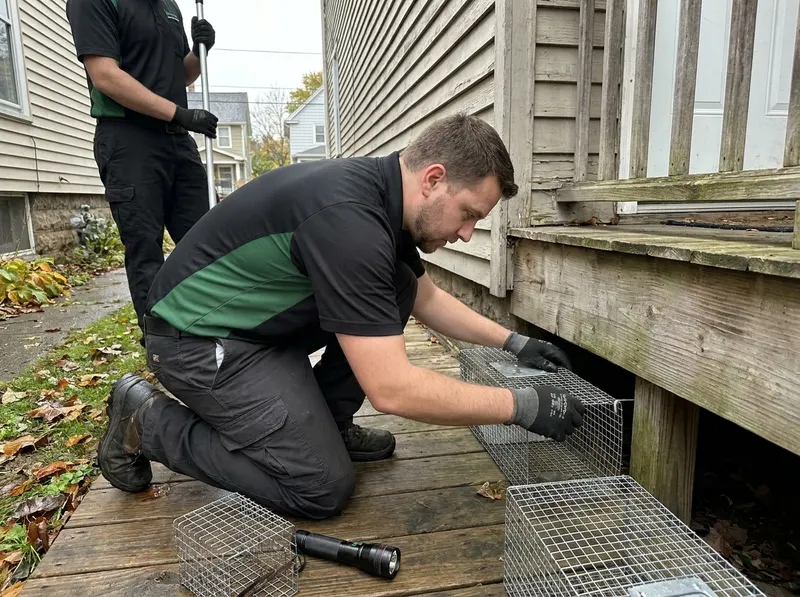
Older architectural housing stock across Buffalo presents specific vulnerabilities to native mammalian wildlife seeking thermal shelter during Western New York freeze-thaw cycles. In historic neighborhoods such as Allentown, Parkside, and the Elmwood Village, wood soffits, unbacked decorative fascia, and slate roof transitions deteriorate over decades, allowing eastern gray squirrels and raccoons to gnaw entry points into uninsulated attic cavities. Near green corridors like Delaware Park and the Buffalo and Erie County Botanical Gardens, raccoon mothers exploit compromised louver vents and masonry seams to establish maternal dens between March and July. Groundhogs and skunks consistently excavate crawlspaces and low-clearance porches throughout South Buffalo, Black Rock, and the West Side, compromising perimeter grading and foundation soil stability.
Effective mitigation relies on structural exclusion rather than poison baits or temporary scare tactics. In New York State, the Department of Environmental Conservation strictly regulates wildlife handling; target animals must be humanely evicted or trapped in accordance with Environmental Conservation Law. For squirrel or bat colonies nesting in high-gabled attics, technicians install heavy steel one-way check-valves over the primary egress point while sealing all secondary gaps down to 1/4-inch using 19-gauge galvanized steel mesh. This allows nesting wildlife to exit the structure safely to forage while physically preventing re-entry, rendering the envelope impenetrable without indoor broadcast chemical applications.
Remediation protocols address the biological risks left behind in wall voids and insulation. Nesting raccoons establish distinct latrines containing urine, fecal accumulation, and parasitic roundworm eggs (Baylisascaris procyonis), while bat colonies deposit concentrated guano that fosters fungal spores (Histoplasma capsulatum). Complete structural defense involves removing trampled and soiled cellulose insulation, neutralizing pheromone markers with an enzyme application, and sealing framing timber. A focused exterior trap program addresses single wandering nuisances, whereas full exclusion retrofits protect century-old homes against recurrent winter intrusions.
Every job gets a firm, written price after a free on-site visit.
Tell us about your wildlife removal job in Buffalo and we'll send a clear, written quote, usually the same day.
 Gravion Pest Control